Utility safety software, answered
Can each job have its own FLHA?+
Yes. The crew completes and signs an FLHA for each job, so the record shows the hazards and controls for every stop, not one form for the whole day.
How do emergency alerts and roll call work?+
An emergency alert is sent to every active member of the workspace, and each recipient has to acknowledge it before they can carry on using Muster. The alert screen splits the crew into accounted for and outstanding, so you can see who has not answered.
Can I see readiness across all crews at once?+
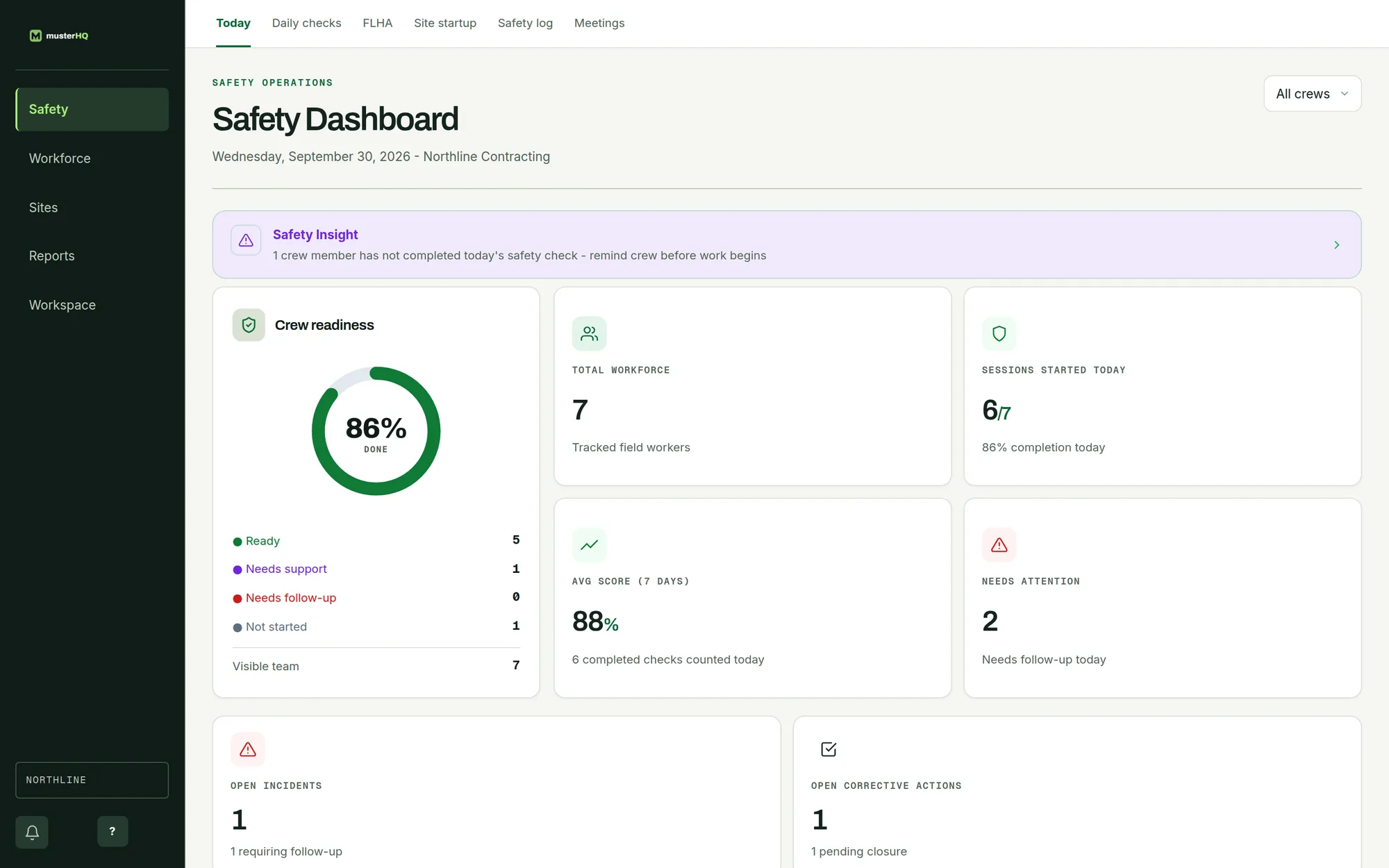
Yes. The dashboard shows the day’s readiness across every crew, and can be narrowed to a single crew.
Do crew members need a laptop?+
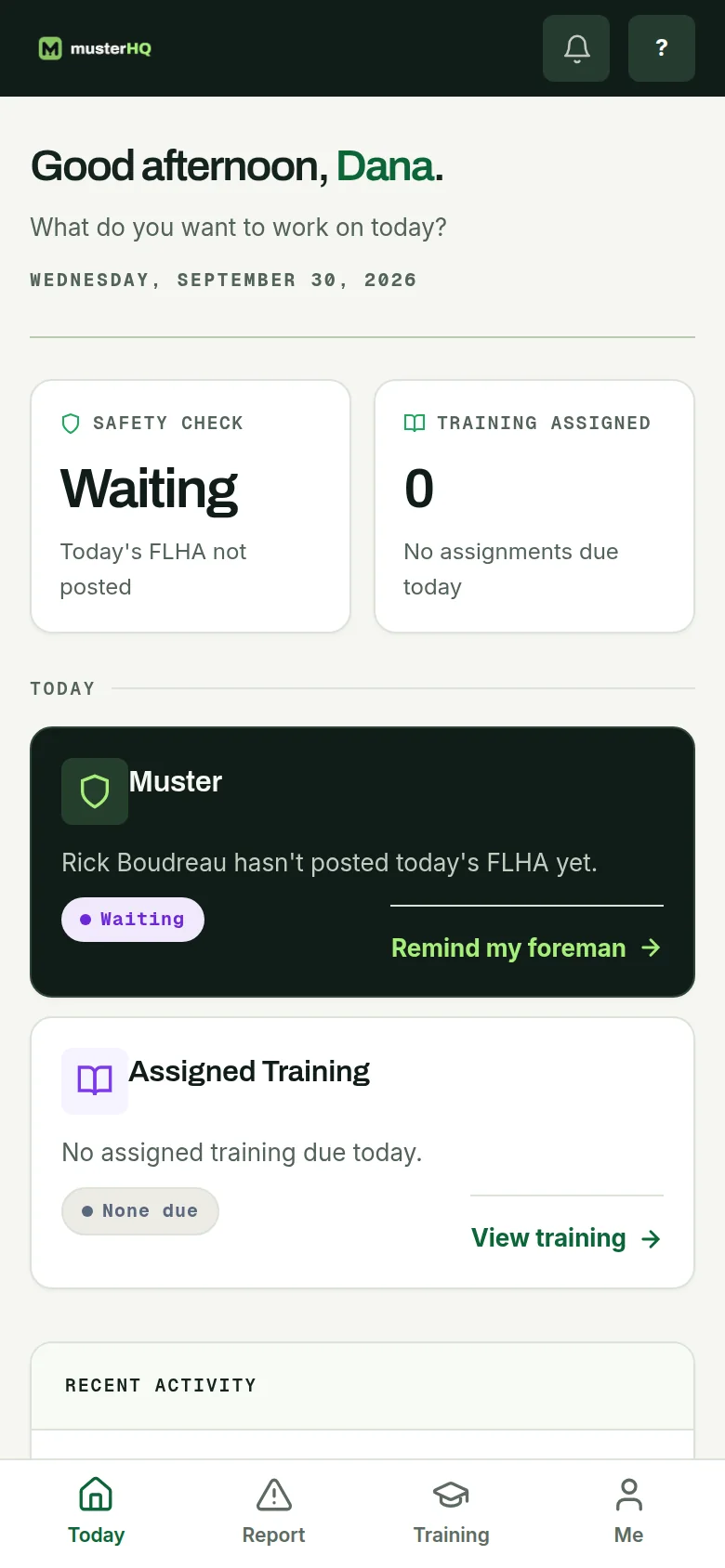
No. Everything a crew member does in Muster, the daily check, the FLHA, a hazard report, is done on their phone.